This week (or, more strictly, the week just gone, but let’s say “this week”), Liz Dexter has been hosting Non-fiction November, and she’s offered up a really interesting set of book pairings that got me thinking about how I read and relate to non-fiction. For a long time, I was not a great non-fiction reader, but particularly when I have been struggling to write fiction, non-fiction has increasingly become part of my reading diet, and I’ve found myself alternating or overlapping with fiction reads. This year, some of my Great Nineteenth-Century Reading Project has deliberately alternated back and forth, especially on the topic of race and empire, and representations of disability and illness. And, in my unplanned reading, I’ve gone back and forth too, finding historical fiction and historical true crime particularly useful to pair up as I was finishing The Meinir Davies Casebook and then thinking about a sequel.
So, here’s some fiction/non-fiction pairings that you might like!
Mangled Murders

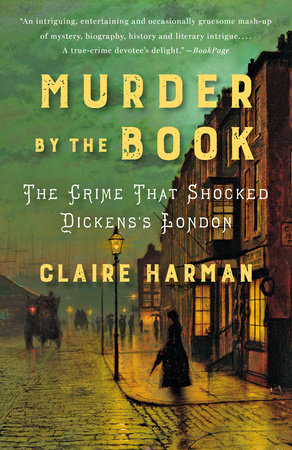
Both of these books play to our fascination with Victorian scenes of crime, as well as the relationship between true crime and crime fiction. Kasasian’s Holmesian detective is framed as a precursor to the great detective of Baker Street—Dr Conan Doyle makes a brief appearance—while Harman’s true-crime narrative explores the Lord Russell murder of 1840. I happened to read these two in parallel earlier in the year, and it was interesting to see how both play to connections with literary greats (Doyle and Dickens) to help lend intrigue to their stories, even though the connection is really entirely tangential. Because crime and detective fiction is now such a staple of everyday life, alongside true crime news and media coverage, truth and fiction have an eerie tendency to blend together in our imaginations.
Visions of poverty


In a way, this is slightly unfair as a juxtaposition, as Morrison wrote plenty of his own journalism on precisely this issue! But both Morrison and Sims pursued their interest in social issues through non-fiction and fiction writing, and it’s interesting to read them in combination. They both wrote particularly about the East End of London, which is an area that continues to house significant pockets of poverty with extreme wealth. (Tower Hamlets, for example, where I live, includes the private Canary Wharf estate, as well as some of the poorest sections of London.) Across the UK, and in many other countries, the availability, affordability, and suitability of housing remains a crisis.
You can find other fiction/non-fiction pairings at the InLinkz page for Non-fiction November, Week 3, but it would be great to know some of your favourites too!

 Dominique Gracia
Leave a comment